

Long-lasting performance and affordability
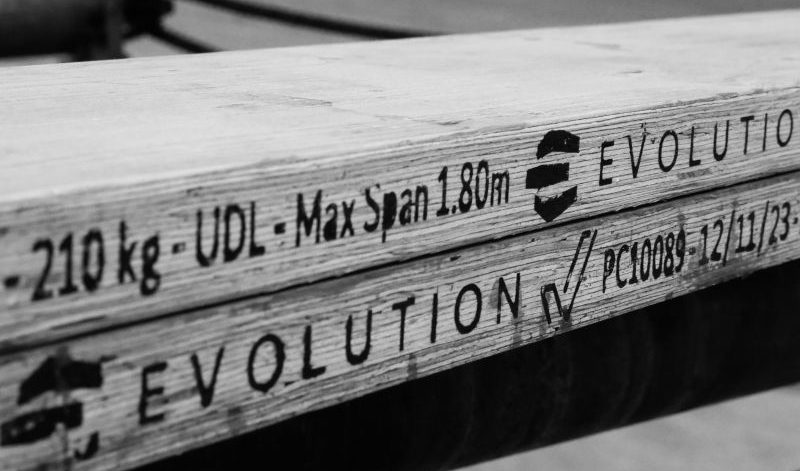
Now available from Evolution Industries’ warehouse in Dubai, our laminated veneer lumber scaffold planks are used throughout the Middle East on job sites where builders need something tougher than wood planks that last longer under tough conditions.
Evolution’s LVL scaffold planks resist exposure to weather, rough handling and continuous so they save builders and scaffolding companies money over time. Every veneer in our scaffold planks is ultrasound graded to ensure strength, straightness and consistency.
LVL Scaffolding Planks: The Modern Standard for Strength and Reliability
In the construction and industrial sectors, safety and performance are non-negotiable. One of the most critical components of any scaffolding system is the wood plank, the surface workers stand on every day. Traditionally, solid lumber dominated the market in UAE, but now, Evolution offers a stronger, longer-lasting alternative that saves builders money over the long term: laminated veneer lumber scaffolding planks.
In both commercial and residential builds, LVL scaffold planks have become the go-to scaffold plank material for builders who appreciate reliability and performance and don’t want to waste money by rebuying scaffold planks after a few weeks of use. Whether you’re managing a large construction site, overseeing maintenance operations, or sourcing materials for a scaffolding rental business, understanding the benefits of using LVL scaffolding planks is essential to making informed decisions.
What Are LVL Scaffolding Planks?
LVL stands for laminated veneer lumber, an engineered wood product made by bonding thin layers of wood veneer together using strong adhesives under heat and pressure.
Unlike traditional lumber, which can contain natural defects like knots, splits, and grain irregularities, LVL is engineered without those natural defects found in raw timber. In the LVL manufacturing process, these defects are removed and what is left is stronger, straighter and more dependable – and it lasts far longer than regular wood planks.
Key characteristics of LVL scaffolding planks include:
- High strength-to-weight ratio
- Uniform structural integrity
- Resistance to warping and twisting
- Predictable load performance
- Longer service life
Why UAE Builders Are Switching To LVL Scaffold Planks
For decades, traditional wood planks were the industry standard for scaffolding boards in the UAE and Dubai. But as builders became aware of the benefits of LVL scaffold planks, more and more have switched because of their superior performance.
1. LVL provides consistent strength and performance
One of the biggest advantages of LVL planks is consistency. During the manufacturing process, defects in the natural wood veneers are removed, such as knots, twists and holes. What’s left is a product that is consistently strong across the board length with consistent load capacity. This consistency is especially important for large job sites where multiple crews rely on the same scaffolding boards daily.
2. Longer lifespan equals reduced costs
Durability is another major reason contractors choose LVL planks. Compared to traditional lumber, LVL scaffolding planks:
- Resist wear and tear
- Maintain shape over time
- Require fewer replacements
- Deliver better long-term value
Although the initial purchase price of LVL may be higher, its extended lifespan results in lower overall costs. For UAE businesses with an eye on long-term financial growth and success and companies managing large inventories of scaffolding materials, this durability translates into significant savings.
When evaluating price of LVL planks versus wood planks, consider:
- Replacement frequency
- Maintenance costs
- Downtime risk
- Safety performance
In many cases, LVL planks prove more economical over time due to their durability and reliability.
3. LVL scaffold planks are a greener choice for UAE builders
UAE’s commitment to green building is world famous. LVL can be part of that. Because there is so little waste in the LVL manufacturing process and in the jobsite use of LVL scaffold planks, laminated veneer lumber is considered a greener alternative to traditional wood planks.
Laminated Veneer Lumber Scaffold Planks Cost
While LVL scaffolding planks typically cost more upfront than traditional wood planks, they often provide better long-term value because they outlast traditional wood scaffold planks. Factors that may affect the cost of laminated veneer lumber scaffold planks include:
- Plank length and thickness
- Load rating
- Protective coatings
- Quantity purchased
Storage And Handling For Laminated Veneer Lumber Scaffold Planks
- Keep scaffold planks dry wherever possible.
- Dry planks can be stored on top of one another, well clear of the ground and covered to keep dry.
- Wet planks should be stacked in a dry, well ventilated area clear of the ground, with spacers between each layer to allow adequate air flow to dry out the planks.
- Protect planks from excessive exposure to water and temperatures exceeding 150 degrees Fahrenheit (65° Celsius).
- Stacked bundles should be kept off the ground. They should be supported by stickers approximately 6 feet (1.82 m) apart.
- Do not store heavy objects on the planks.
- Do not overload scaffold planks. If planks are overloaded, they must be removed from service and tested before reuse.
- Do not throw planks or drop from heights.
- Do not hit planks with the fork blades.
- Scaffold planks should not be exposed to oxidizing chemicals.
- Avoid placing heavy objects on planks. Do not jump on planks.
- Use the planks exclusively as scaffold planks and for no other application or purpose.
- Do not drive vehicles over or on scaffold planks.
LVL Is The Next Evolution In Scaffolding
LVL scaffolding planks represent a significant advancement in construction safety and affordability. Their engineered design delivers consistent strength, longer lifespan, and dependable performance, qualities that are essential in the UAE’s demanding work environments.